Uncategorized

Crushing Emotions

Several times in the last 2 weeks, I have had the opportunity to explain how feelings around me affect me. Each time I have tried, though not successfully, to explain that the emotional baggage around me feels physical. This is not an easy thing for most people to understand. It is also one of the reasons I prefer not to be in large crowds.

Today’s discussion was with my students. We were having a good, detailed discussion on feelings, and what hurts us. One of my students wrote on their paper that they don’t like angry people near them. so we discussed it as a class. He told us his feelings, which I will not place here. But then I explained how I felt. Half the class seemed to empathize.

When people are angry, or fighting nearby, I feel it. My brain gets heavy, my whole body feels like it is being squished down. It’s like an invisible pressure is squeezing me. Depending on the amount of emotion the people nearby are showing, the more pressure I feel. If it’s bad enough, I have to leave, or I collapse into a rocking ball.

You can maybe guess why I don’t teach high-school.

I did not tell me students about the extreme end there, just the physical pressure.

On the flip side of this, the opposite is true, but to a lesser extent. If I am near people who are having a good time, or are in a good mood, I feel lighter.

The difficulty for me in these situations, is perception. I don’t always read people well. There have been times I felt crushed down. Where I felt the negativity, but the person I thought was upset was not. It did not change my reaction to it, however.

It can be exhausting. Add this to the many other difficulties I have, and I practically fall asleep from exhaustion when I get home. Today I zonked out 4 times while trying to help my daughter with her homework.

I am curious if anyone else has this difficulty. If so please let me know that I am not alone in this by leaving a comment.

Coloring: The Great Soother.

The act of coloring is one of my best tools. Each tool is used for different situations, and some can be hidden much easier than others. Tools can be used for focusing my attention, distracting me from over-stimulation, and calming my mind. Tools do not always work. There have been days that I used my tools, and were still overwhelmed.

Coloring is an amazing tool because I can do it under most circumstances. All I need is a piece of paper, and any writing implement. Ball point pens are the best.

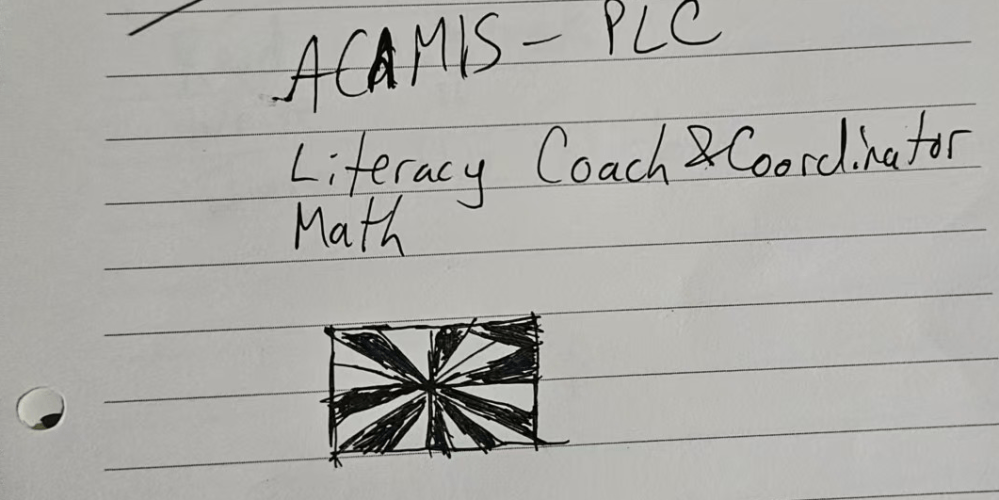
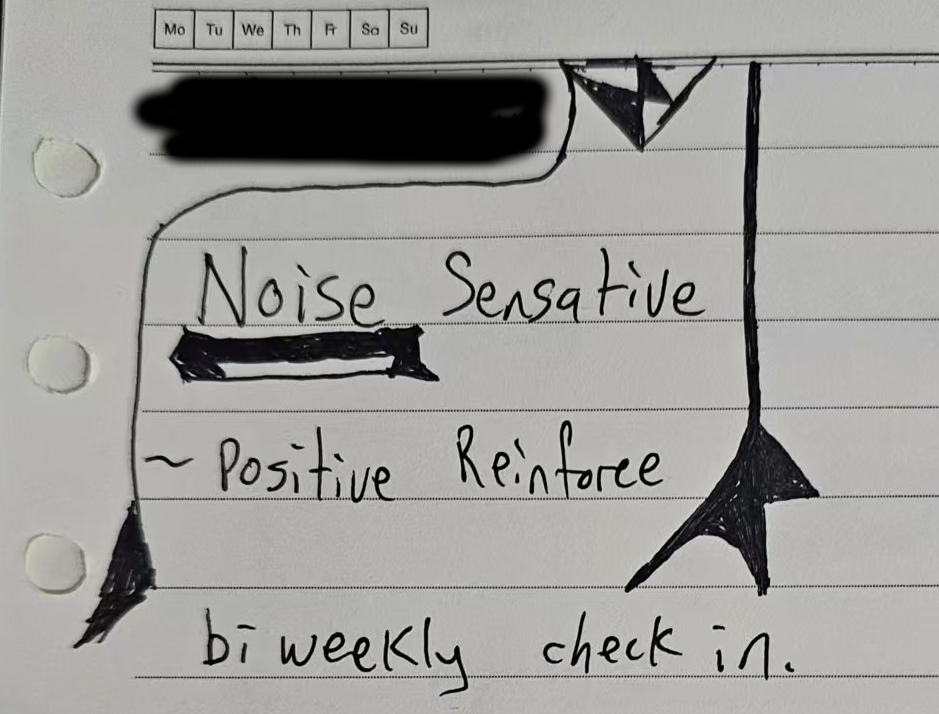
Anyone who has seen my coloring, knows it is not for aesthetics. I draw a box or connect lines on a page of text, and then I divide that into triangles. Triangles are the best. Once I have a group of triangles on my page, even if it is just a small section, I start filling them in one by one. When I have run out of triangles, I add more.

One of my earliest memories is coloring. I was asked to draw something, I don’t know what, in kindergarten class. So I took the black crayon, and zoned out. My teacher cautiously shared my completely black piece of paper with my mother. I had wore that crayon completely out, and this apparently was not the right thing to do. Other children were mad at me for using it all. and the teacher just told them that maybe I just liked black.

I don’t. Black is ok, but my favorite colors are Navy Blue and Dark Forest Green.

Even now as an adult. There are meetings I get so lost in that I start filling my notepaper with black (or blue if that’s the pen I have) triangles. At the beginning of the year we had to present to the parents about our curriculum. I remember sitting down after I made my speech, and starting coloring. I filled that my speech paper, and just as I was finishing the last bits, my teammate passed me her paper to work on. She knew I needed it. She knew that if I didn’t, I would have to race out of that room. None of us wanted me to have a meltdown while parents where in the building.

I have mentioned I have some of the best teammates at work right now, haven’t I?

The thing is, Coloring ticks all the boxes. It moves my hand in just the right way that it registers as a type of stimming. But it is nearly invisible to those nearby. Coloring allows me to focus and create order out of what is around me. Triangles are the strongest of geometric shapes. These triangles allow me to focus on them, I can block out the other visual stimulus, and focus on the listening.

In many meetings, my only other option is to close my eyes to listen. Mostly frowned up, as the presenter thinks they put me to sleep. I know, and select few others do too, that If I try to follow what is being said, I will get lost because of lighting, or people nearby, or many other things. I just simply will not be able to follow what they are saying.

If the speaker has visuals, I can follow better, but still sometimes need my coloring.

This is an autistic solution to an AuDHD problem. You see, my lack of focus is mostly a problem due to ADHD, which many Autistics also have. Following conversations and fast speaking is very much an Autistic problem. This means that most meetings are extremely hard to follow for me. I have tried making notes to help, but the act of writing important things down, means I fall farther behind on understanding. I have tried recording meetings in the past, but this caused some at my old company to get very defensive and angry. So my best tool for the job is to color little triangles, and try to get what I can from the meeting, even if it is little to none.

My triangles help me beyond meetings though. Anytime I am feeling overwhelmed, and cannot get into a quiet place, or away from people I will sometimes revert to coloring my triangles.

No time to think.

I have been witnessing somethings lately that make me reflect on some personal difficulties.

Time to think.

I have several students in my class that need time to think. If you ask them a direct question, they stop and they process before they can answer. If this was at my old school, I would attribute it to a language barrier. This may still be the case with these boys. However, knowing these students I don’t believe it is. Below are a couple examples, but there are several other examples I could use.

In one case, a girl was upset that the boy had fidgeted with something on her desk. She laid into him, first in English wanting to know why he had been touching her things. When he couldn’t answer, she switched languages to Chinese and demanded the same thing. The boy stayed quiet, but you could see the gears turning. I calmed the girl down, and let the boy have time to think. He was able to respond to her and apologize. He could even and explain. But he couldn’t do it when she was so upset. Her anger short circuited his speaking.

A teacher was upset about a different boy in another case. He did not wait for the instructions in a class. Instead, he ran off to play a game. Which made things harder for everyone else. The boy was trying to listen, but to do so, he was looking at the ground. He also wasn’t answering the questions. The teacher kept demanding that the boy look at him, so the boy would, but then he would look down. When the teacher finished talking it took the boy a good 30 seconds to a minute to respond. Which was too long for the teacher, who was expecting an answer right away. I stood nearby. To give the child a moment to think, I asked the teacher for information, as this was my student. When he was done, the boy had enough time to process and speak.

I am not stating that either of these boys are autistic. I am not capable of diagnosing them. I do have suspicions though due to many things I have seen. But I know that autistic people cannot listen well if we have to look someone in the eye. Looking into someone’s eyes is like staring into someone’s soul. And if that person is angry, its a scary place to look at. I also know that the emotions around an autistic person can overpower our ability to think well and respond. Despite people believing autistic people don’t feel emotions, we do. Some of us, feel them physically. This weight causes us to freeze up.

That’s called Selective Mutism.

The misconception with this term is the word Selective. This gives the impression that it is chosen by the autistic person. Often this is not a choice. The anxiety of a situation gets so bad that we can’t say much of anything at all. Some people with Selective Mutism, cannot talk when in unfamiliar places or near strangers. But at home with family they talk just fine.

I had a situation last week. There was a child I was worried about. On Friday, I had checked my schedule and asked the parent to come talk on the following Wednesday. Monday and Tuesday were going to be busy days. I had an observation scheduled for Monday. I would be emotionally ready and prepared by Wednesday. On Monday my administrator came in, there was a problem, but no specifics. Then my principal came in to see if I had time, again no specifics. Early afternoon, My Vice Principal asked someone to cover my recess duty work, so I would have time.

I went into the meeting. The father I had a scheduled meeting with for Wednesday had a complaint that needed immediate attention. My admin wanted to brief me on the situation. Immediately after that meeting, the same vice principal came in to do my class observation. I was not my best and felt I was all over the place.

After school, the parent arrives, and we have the meeting. He is very upset, about the situation. I had not yet had time to process, and all I could do was try to make notes. I could not respond well, if at all to the situation. Near the end of the meeting, I said something that should have been said at the beginning of the meeting.

The father left, happy that his situation was being dealt with. I left, still unsure of what was happening.

You see, even though I had been warned of the meeting 2 hours before. I had two classes. During that time, I was either being observed or handling large groups of children effectively. I had not had even 5 minutes to myself. I agreed to things, but still don’t know what they are.

If we had kept the Wednesday meeting I would have been more effective.

When someone tells you that they don’t even have time to think, it sounds like just an idiom. To autistic people it may be the literal truth. We need time to process. don’t expect an honest response if you don’t let us. And if we don’t respond right away, give us more time. We just want to give the best answer possible. And if emotions are involved, it takes double or triple time for us to respond.

My mind tries to process the emotions, and the words separate. Which is spoken because of the emotion? Which is perspective? Which is factual truth? Which is the question actually being asked? Is there a question being asked? Do they want me to answer? How can I answer in a way that will not cause more emotion? Can I answer honestly? Do they want an honest response? Will I keep my job by answering this question? Will I cause more problems by answering this question? How can I ? These questions and more need to be sorted out before I can begin to respond. And if I have not sorted out the purpose for the question or meeting, that takes priority.