neurodiversity

Brain Fog

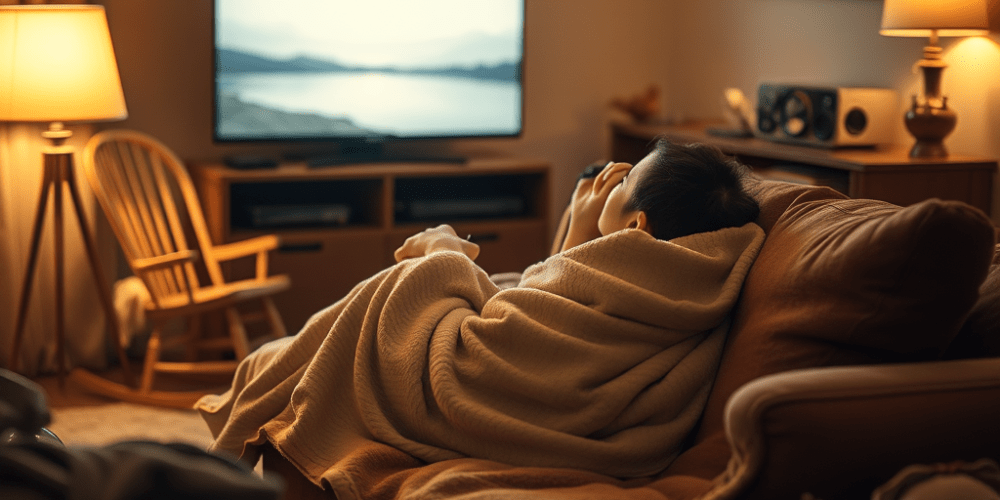
On Monday I came home, curled up on my sofa in a blanket and turned a religious documentary on. Then I closed my eyes and just lay there. I use the show as a type of white noise to lull me to sleep. Regular white noise gives me headaches. However, if I can have a single human voice to listen to, I can begin to relax.

When I have Brain Fog, its like standing in an actual fog. I know the world is out there, but I cannot connect with it. I feel like my mind is pushing through taffy, and the more I push the more difficult it becomes. So I need to find ways to just shut down for a while. I can’t talk much, but I can listen. Its best if It is a single human voice to listen to. I often choose documentaries. Their voices are calm and soothing.

I have been asked by a couple of people about this lately, which sparked the topic. My daughter, who is very good about asking if I have the energy to play with her each day. If I need to say no, she plays in her bedroom. If I say yes, she brings her toys out to me and we play. She was asking about my blanket and my show on Monday.

I tried my best to explain. But I am sure I was not clear. I was groggy, and trying to make it simple for her to understand. I told her something about when I have had a lot of people needing me. They are either trying to get my attention or just being too overwhelming around me all day. I need the rest.

I have my rocking chair, But don’t get to use it much this semester. I have been finding myself trying to make time to sit in it. This has led to a lower productivity. I have more work right now, and less time. I have more classes. I have more events to get ready for. I also have more homework to check. There is more classroom designing to do. It seems there is more of everything.

I get so lost that I sometimes forget to turn on my music with my headphones. I will just sit there with the noise canceling headphones on, and stare at my workload for 5~20 minutes.

My other place I have discussed it is on Reddit. I joined the autistic community there. I have been giving advice to autists who are 1/2 my age or less. I also offer emotional support to this group. And one was asking everyone how they deal with brain fog. So I explained. I think it would be better with a weighted blanket, but I don’t have one right now.

Tuesday and Wednesday have been only slightly better than Monday.

Temperature Troubles: My experiences with Temperature & Autism.

I have been wondering recently about temperature, and skin sensitivities. Specifically regarding me. I have been trying to read and learn more about autism lately. It doesn’t feel like one of my normal special interests. However, with the amount of time I put in, it may be.

I have a strange relationship with temperature. I may be outside during recess and the temperature will read at 0 degrees. I don’t notice it much. On the same day, I may be at home, resting on the sofa. It’ll be 17 degrees in the house, and I will be freezing. I will need my blanket, and to be wrapped up.

This drives my wife nuts.

I am not ignorant of the temperature. I can feel a bit of discomfort. My leg muscles will tense up, and start to hurt. My knees get stiff, and I have a hard time walking. But I don’t feel “frozen” or the need to cover every inch of myself like the other teachers nearby. I used to believe it was because I am Canadian, and we joke about this a lot in Canada.

But then why do I freeze in my own living room?

My theory on cold is this. My feet are sensitive. When I’m outside, my feet are wrapped up in warm socks. I have my shoes or boots on to keep them warm. But at home, I may have no socks on if I just got home. (My feet sweat and need to breathe or they stink). Or they may have just socks on. Either way, I feel cold. My whole body feels it, but I think it starts on my feet and works up.

In the summer I have the opposite problem. I don’t feel overly warm, and often need others to remind me to take my jacket off or similar. My family knows I will dehydrate if not. I will notice a burn, or overheating that causes physical pain. But as a temp, It doesn’t bother me.

My skin, however does react. If I sweat, my skin gets itchy. My legs and my sides are the worst. I swear my sweat is corrosive as well. I get rashes on my skin from my sweat. My leather watch bands dissolve rather quickly. My metal watch bands corrode. Only my cloth bands survive, but they get itchy.

My mouth, like my feet, however is sensitive. I love Hot drinks, for example, but cannot drink them too hot. I love holding a hot mug of coffee, or hot chocolate. I just hug it, it’s awesome. But I need it too cool before I can drink it. Likewise I am very susceptible to Ice-cream headaches. That one may be just because I eat it too fast…

Interestingly, the American National Library of Medicine seems to confirm that It may be an autistic trait in me.

I am by no means an expert in Autism. However, I can, and have tried to express my experiences as an Autistic Adult (Autist?). Please don’t take my articles and use them to diagnose yourself.

Routines: falling into or making them?

Routines are a very important part of life for me, and for all autistics. Th difference between routines and schedules is blurred for many people. For us, however, there is an obvious difference, and when routines and schedules clash, headaches occur.

So first let’s explain what I mean by both Routines and Schedules before we continue. A routine is an action repeated in a certain order on a regular basis. the actions do not have a set time to begin or end.

My daily drinks are a routine; Every morning, I have a coffee with or just after breakfast. I then bring a mug of hot chocolate with me to work. Hot drinks calm me down, and help me relax and think. On a tough day, my hot chocolate doesn’t last. I must then get a mocha from the cafe on campus. Then in the evening after dinner, when the children have gone to bed, I have a lemon tea.

A schedule dictates the times things begin and end. Period one begins at 8:20, and ends at 9:05. No exception.

I have a love-hate relationship with schedules. First: I have a hard time keeping track of time, and I know several autistics that do as well. To combat this, I have alarms on my phone and smart watch. They warn me when there is only 5 minutes left to a class period or a recess. I don’t like surprise schedule changes, or endings. My other problem is my brain is fixed that a schedule must be followed. I get anxious if it is not. Family running a little late for church? anxiety. Another teacher running into recess or break time with my students? anxiety. I finish my lesson early, and have empty space to fill? anxiety.

Many Autistics are able to easily merge their work schedule with their routines. I envy this. However, the school I work at does something that makes it really hard to keep track of for me. Our schedules do not follow the calendar week. The schedules follow “Letter Days”. Each week is different than the previous week. but there is still a repetition there. So now I have to keep track of 2 separate calendars in my head. Children have special events on Week Days (Little Johnny takes the bus home on Mondays), but classes follow “Letter days” (Grammar class happens on Days A & C)

Many days my head hurts from planning the week.

But this comes to the point of all this. You do these things, you eventually fall into routine with them. after 3 years, I am better at planning my week around the letter days. I also have a better control of my daily routine. You just fall into them whether you like it or not.

Arguably, falling into a routine because it is forced on you, is easier than creating your own routine.

Often we are told about how managing our routines can benefit us. As an Autistic, I have a limited amount of social energy. So I try to use it sparingly. the problem is, if I drain myself, it stops me from thinking. My brain shuts down.

I know I need to change my routine, and go to bed earlier, or to blog regularly. But the change of routine takes energy, and it feels unnatural for the first month or so. So if I am drained, like I often am lately. I don’t have the energy to fight the routine, or to change it. I just fall into it to save energy.

One example of this. Back in September my wife and I promised to walk with each other Monday, Wednesday, Friday. The plan was after dark, just around the block. But every day I have come home completely exhausted. I have just enough energy to (most days) help my daughter with her homework. And then I shut down. I stare at a screen or a wall, and cannot function for hours.

Another example is My weekly teacher D&D Game. Many people would think that this would cause me to get drained. But it was my routine. I would talk with friends, problem solve logically, or laugh. I would come home feeling a bit refreshed. When we had a month of cancellations, I was more exhausted just coming home. and I had to accept a change of routine, that I really did not want.

Of course some routine changes are easier than others. If I have someone there to help me with the routine, it becomes easier. My wife helping me get used to the weekly church is an example. Or the messages I get from members of my Men’s group reminding me of the Monday meeting. these were easy to get into. Other people are sharing the energy loss.

Alone, it is hard, exhausting, and sometimes terrifying. Not logically terrifying, but emotionally so. Knowing how hard it can be, I just don’t want to do it many times.

Who helps you with your routine changes? can you make these changes on your own? please let me know.