mental health

I want to write…

I find writing very therapedic. I love writing, as most Autists do. But often times I just can’t do it. I will sit down with a great idea in front of my computer, and then something will interrupt me. Once I am interrupted, my brain doesn’t reset to work mode.

Tonight I opened my novel, Gateways, I was about to start writing ideas for chapter 5. As soon as the file loaded, my wife sat down beside me. She wanted to talk about our current Job hunt. I understand that, and I love my wife. So we talked about the future for a few minutes. maybe 5. and she left me to continue my writing.

It was gone. all my thoughts on the chapter had now been released to the wild. I sat there trying to focus, and I found I was no longer even in the mood to work on that book. So I opened up my New Valarians book. I started to make notes on Chapter 7 of that book, and it was not time to tuck my daughter in.

I love reading to my daughter, and tucking her in. It is one of my daily highlights. But when I sat back down, and stared at the book pages… nothing. Those thoughts had flown the coop. And I no longer felt the urge to work on that book.

So I sat staring at my screen, and drank my tea. and I thought I would share my notes on Autism and Writing.

Written Communication Over Verbal Communication.

Many Autists prefer to communicate through writing. There are a few reasons for this, but it starts with our difficulty with verbal communication.

When we speak to a person, there is an unwritten rule about the proper pace. How much time needs to be between each speaker. Too long, and the one speaker gets bored or thinks you are not listening. Too short, and you are too eager, or you are not listening, because you border on interrupting. Both are often labeled as rude. Also if an autist, like myself is talking and we get interrupted, we loose our thought process. We stumble, as we had our words laid out in our mind before speaking. When we write, we can take our time to plan out what we want to say. We can take our time, and not be interrupted.

Clarity is also an issue. When we want to communicate something, there is often a lot of details we want made clear. We want there to be no chance of misunderstanding, and so a lot of written messages are long. We cannot get that clarity when we speak. Allistic (neurotypical people) often ask questions to clarify. Once we have been asked a question, often times we have to spend time searching up the information in our brain to find the answer. Because of course the questions asked are not the questions we thought would be asked. Also the pause to find the best possible answer can be often seen as not knowing the answer. Thus it seems like we are deferring to the wisdom of the allistic person. Even if our information is more up to date, or correct.

I love writing. But I do not enjoy texting. I used to enjoy texting, back when it was simple. But nowadays, no. I will often times use voice to text, and then spend 15 minutes editing the text. You see when you communicate by text, there are now rules to texting.

You cannot make a large text, it is rude. You have to use simple words, because if you use real words it may offend the other person and be seen as patronizing them. CAPS CHANGE THE MESSAGE. So if you accidentally lock the caps on, you have to go back and rewrite it. Emojis are used to show feeling, and many other things. I liked it when there was just 5 emojis; 🙂 😀 😛 😦 @-}–

When I send text to people now I have to spend 5 minutes just scrolling through the emoji list. I’m asking myself which one is the correct one to use… I don’t know. If I put a flower, does it mean, I want you to have a happy day, or does it mean romantic feelings? Why do we even have an eggplant? and Flags? birthday cake? streamers? dogs? cats? soccer balls? Why can’t we just use words for these things?

When I am writing my novels, or my blogs, I do not need to use emojis. I can relish in the joy of real words. It is a blessing. It helps me de-clog my mind. However, sometimes, as is often the case in here, I feel it is unstructured.

It takes a lot of energy to structure my thoughts into comprehensible writings. Then to go back and add details can bean added hurdle. That’s kind of why lately I feel more like I am just rambling on my blog, but it brings peace to my mind and helps me sleep.

So that is where I am off to now.

Maybe this weekend I can get some writing on my books done.

Autism Month and Me

I know I missed posting on Autism Day. I have been overwhelmed a lot lately. A lot is happening, and some of it is happening too fast. This causes problems with routines, and overthinking.

April is Autism Month. I am glad we have a whole month, and am hoping the world keeps it going for the future, but the world in 2025 is a scary place. I am desperately avoiding News, but that is not always possible.

April 2nd used to be called “Autism Awareness Day”, and then for a while it was called “Autism Acceptance Day.” Now is it just “Autism Day”.

“Why the changes?” you say. Years ago, an organization was founded and brought awareness of autism to the majority of the world. I will not name the organization for now, but if you look up the puzzle piece you will easily find it. There were no Autistic people involved in the organization, but they did what they could to try to understand autism, and bring awareness to people. They were directly involved in creating “Autism Awareness Day” and encouraged people to wear Blue shirts on that day.

The world has since changed. That organization is still around, but had been focusing on ways to “cure” autism. because they feel that it, and us in return, are a disease. as expected this has created a huge rift. Remember there were no actually autistic people on the board of the organization. But we don’t want to lose a day that the world recognizes us and tries to understand us. So many of us pushed for the new name of “Autism Acceptance Day.”

The world keeps changing, and we all are learning more about what it means to be autistic, and what autism entails. I myself was diagnosed as HSP (Hyper Sensitive Person) and autistic as a child. But nobody could tell me what that meant. The only child therapist in town told my mother that I would be smart, but slow. (Both stereotypes of the time).

I never knew why I had to see councilors in school on a regular basis. I was 30 years old when I finally started to piece things together. Because nobody in my life knew what it meant. And then It took me a decade to figure out how to work around the difficulties I was having. A process I am still figuring out, mostly on my own.

We are now at the spot where, Awareness is there. Everyone knows autism exists. But there is a huge amount of misinformation out there. Acceptance is slowly happening, but the world doesn’t like that word, “acceptance.” It is now viewed as “putting up with,” which is not the same.

So we don’t want the world to put up with us. We want the world to acknowledge that we exist, and, like other groups in the world, help us to be productive members of society. Stop gate-keeping things.

One of the problems with Autism though is that it is a spectrum. Every Autist (Autistic person) has special needs, and requires different help. Some of us need a lot of support, and some of us only need that support sometimes.

“But Chad,” you say again, “What support do you need? You are always so grounded.” Ok, you might not say this if you know me…. but I felt I should help you understand myself and some of the things I need support with.

Time to think. Every time someone comes to me out of the blue and asks “Do you need help?” I am thrown off guard. I cannot process this and whatever is happening around me so I will 99% of the time say “No.” its fast, it clears up my mind and I can continue to try and process what is happening around me. EVEN IF I NEED HELP I cannot name what I need without time to stop everything I am doing and think it out.

This also causes severe case of imposter syndrome, when my team is able to go much faster with their classes, and I am still planning out my classes and organizations.

Routines: I love the school I am at, but I hate the 6 days rotating cycle system. I cannot get into routines. I am never sure where I am supposed to be, what I am supposed to be doing, and how much time I have to do it in. I have monthly cycles, and weekly cycles I down pat, mostly. But planning around yet another cycle requires paperwork, and lots of it. But then I spend more time planning what I am supposed to be doing, and not having the time to actually do it.

When routines change last minute. (Oh we don’t have music class today, we have a last minute assembly) I get lost, confused and panicky. I need information about changes as early as possible.

Time: Being late makes me panic. I can mostly fix this with timed alarms on my phone. I always warn myself 5 minutes before something should start or end, otherwise I will be late, and then My brain goes into panic. My wife and I differ on this. She is eternally running late, and I am panicking because of this.

Organization: My wife is my life saver. I do not know where things are, in my home. I might use something 100 times a week, but ask me to find it in a supermarket and I am lost. All Ketchup bottles look the same to me, for example. If I go to the supply room for something, I will not find it unless I go around the room 5 times, even if I got it from there the day before. And the more on my mind, the worse this gets.

I often need help organizing my classroom and workspace. But I need to be involved so I can make notes of where things are moved to.

Style: People always compliment me on my shirts, and the colors of my clothes. 100% my wife. When I started out as a young adult, I wore silk screened Hawaiian shirts (Mostly with Superheroes on them) and Cargo shorts everywhere I went. I also wore a black fedora. I am not saying I would wear that specific style now, but I would literally grab the first thing from my closet and put it on. I do not understand fashion. Why people wear certain clothing together or which accessories with what completely eludes my mind.

Voices: I can handle 2 or 3 people talking at once, but no more. I have had days where I had to sit, and close my eyes for a moment, so I could focus on 1 person talking to me out of a room full of people. In a class I depend heavily on the children to help me by raising their hands. I cannot differentiate voices, so I don’t know who is talking to me unless there is a visual cue. Voice styles (Accents and things) I do recognize, but often there is not enough variance in a class of 20 children to use this to identify everyone.

Noise: Too much noise makes it impossible for me to think. If there is a class happening in my room, I cannot mark papers or do anything that requires thought. I need to put my headphones on, and block out sound. But When I put on my Headphones, everyone wants to talk to me!

Food: If I could get our cafeteria to always have penne bolognese and green salad, I would be forever grateful. But it doesn’t work. here is a list of things I cannot eat in public because of many different reasons.

  • noodles. (not Pasta, but long noodles)
  • wet meat with bones (ribs, or in soups and stews, fish)
  • foods with sauce I have to touch with my fingers.
  • mashed stuff
  • food that looks like body parts (I’m looking at you Eye-ball rambutans….)
  • Stinky food
  • Spicy food

I am considered a “Low support” autistic. Some of us suffer shut downs, melt downs and worse from the things I mentioned and more. But people, myself included, don’t always understand what is happening and treat it like a choice.

I think I may be off topic, let me realign.

I believe I was trying to show how understanding that we need support, and just because you don’t notice it, does not mean that its not there. So this month, please just be kind to all, Autist or not. and if it looks like someone is struggling, jump in to help. If you ask, during chaos, be aware that we may need help and just cannot process what you are saying, let alone an answer. Give us a moment to answer, and please just care.

Happy Autism Month everyone.

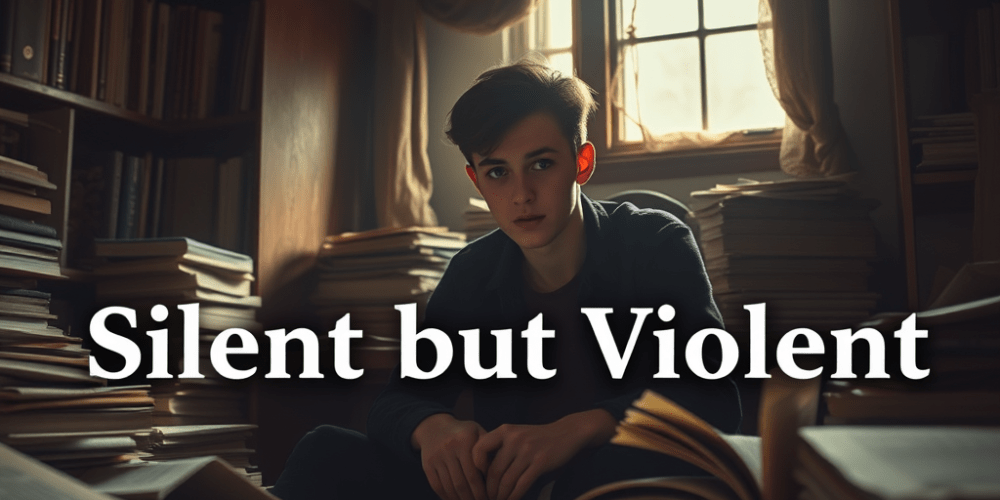
Silent but Violent.

I recently had a conversation about therapy with a good friend. They discussed some of their experiences with it, and I told them that I wished I had been able to have more when I was younger.

I opened up about my memories of childhood, and being told somethings later. Please remember that my memories might not be accurate.

I remember taking speech therapy when I was young. I also remember being told that I didn’t talk until late (like 5 years old late). I remember having a really bad stutter for years. I was told that my mind moved too fast for my mouth to keep up. I was told to try to calm myself before speaking, otherwise I would trip over my words. I remember learning to calm my mind at an early age.

I don’t remember any therapy since.

The thing is I really could have benefited from it. Not just for speech, but for many other things. I opened up to my friend about having violent black outs when I was a young child. I was told multiple times I had nearly strangled my little brother when we were both in diapers. I was told about hitting a child in the head with my metal lunch box. I was told about many other times that I would just change and start hurting people.

I don’t remember these events. But I grew up afraid of myself. I grew up thinking I had a monster inside of me, and that I always had to stay calm and happy. If I didn’t it would get out and hurt people. I spent almost my entire elementary years alone. Partly because I was afraid I would hurt people, partly because I just didn’t know how to make friends.

I spent a lot of time doing quiet things like reading. I used to come home from school and lock myself away with my books. I used to write a lot of fiction. I lost most of those stories, but the ones I have rediscovered I am reworking now. I made my own language including alphabet, vocabulary and rudimentary grammar system. I imagined it was the language of my real world, because I obviously wasn’t from Earth.

The thing is, when you are quiet enough, and watch others enough, you learn. You can learn how to copy them. You can learn their subtle emotional cues. I often feel like I do understand other people’s emotions, but often they are emotions that the other people do not want public. So when I ask them, or try to show care, it scares them.

As I grew up, I learned how to calm myself, mostly. I also learned how to avoid stress. Remember these are self-taught and may not be best practice:

  • Avoid people: The unpredictability of people causes stress.
  • Don’t offer advice or information unless directly asked. People will try to prove you wrong, or will mock your advice.
  • Don’t stand out: Do what your there for, and move on.
  • Find a Safe Space: a quiet place to cry, punch walls, or curl up that nobody will disturb you. You need one for every place you go to. Please remember my generation was not allowed to wear headphones anywhere growing up. We really had nothing we could do to block out sounds, jeers or other sensations at school or in public places.
  • Stuffed Toys are amazing. Soft things help hide fears, and emotions.
  • Count & Breathe: I still use this one. I sit, or lean against something. Close my eyes, and count from one to 10 focusing on the numbers, and my breathing. If I get to 10, I count back down to 1. If I have completed up and down, and am still standing, I sit, and just focus on controlled breathing. I sometimes have to cover my ears at this point to give me reprieve and focus on the breathing.

I think My violent outbursts when I was young may have been caused by over stimulation. Too many things happening, and no way to stop it. so I would black out. (And my body would try to get away from the disturbance). But I honestly don’t know.

In my older years now, I am more in control of things, and have some tools in place to help. So I no longer have blackouts. I do still have times I cannot speak. These come rarely. I try to use my own experiences to help the children around me, but I find it harder to explain to other adults why the children may be acting up. Many of them just think the children are over reacting to things. I don’t wish to yell at them, so I will often just say I will talk with the child.

Children don’t learn in a vacuum. And they don’t suddenly stop feeling their emotions because it inconveniences others. It can be a hard, long process for them. Unfortunately as an educator, all I can do sometimes is sit with them, and try to let them know they are in a safe space.