
Memoires

Culture Confusion.

On our last day of school for the year we had an assembly, like we do every year. This year two grade five girls got a chance to show off their dance ability. It was marked on screen as Jazz Dance, but it was not jazz.

These two girls got up and did a dance very much inspired by K-Pop singers. My co-workers used the term twerking, but I don’t completely know what that means. There was discussion about how appropriate this was. And this brought back memories of conversations I have had in the past since moving to Asia.

My comment, which I voiced at the time: It’s their bodies & their fashion. He reluctantly agreed, but felt his voice should be heard.

Kindergarten Chaos.

Many years ago, I worked at a Kindergarten in Korea. for their year end event, the children performed a dance. It was a traditional dance. The boys were bare chested with sparkly vests and sparkly pants. The girls were wearing a skin-color shirt under a sparkly bra and sparkly shorts.

To my mind they looked like Las Vegas dancers in training. But I kept my mouth shut about it. Why? The parents had been involved with the costume selection, and dance routines. If the parents were happy to see their child in this outfit, in this context, then who was I to push my views on them.

Clothing.

Years later, a previous school I worked at held a charity bazaar. I love charity bazaars, or charity sales. The atmosphere is always very positive.

At this bazaar, a group of 4 of our middle school girls got up on stage and did a dance. It was a high energy, choreographed dance. (K-Pop inspired). A young teacher from California was sitting with me and he commented on the clothing the girls were wearing. Tight jeans, one I think had shorts, white t-shirts, and tank tops. He felt it was inappropriate for them to be dancing in such revealing clothes.

This year

I am not really a fan of K-Pop dancing. I have enjoyed some of the music, but don’t like the dance. Why? I get dizzy watching it. It takes a lot of training and energy to do, and I do not have the balance for this. When I see dancing, I imagine trying it in my head, and I feel like I will fall over. I don’t like this as it gives me a headache.

Not the reason most people expect.

I just cannot watch it. I do not judge the girls, or boys, who can dance this. I respect their ability and dedication. Is it twerking? I don’t know. I still don’t understand that term. Is it sexual? Some will think so. But I am then reminded of the movie Footloose (With Kevin Bacon). The town felt all dancing was sexual. I am not going to be the judge of what this generation feels is, or is not, sexual.

Any adult, who watches teenagers dance and feel strange things below, get help, please.

In my culture certain things are taboo. In Asian culture they are not. My wife enjoys watching this style of dancing. She used to dance it, as did her sisters, and her brother. My youngest daughter (Grade 1) will lock herself in her room to dance to videos. It’s great exercise.

Empowerment.

I was reading about, and watching videos about culture lately. One thing brought up was specifically, Japanese Girls fashion. And then I found similar notes about dance in Korea.

It is seen as a way to promote female empowerment. Girls here dress and dance in ways that would be considered extremely taboo in North America. They do these things to push against the old traditions of how Men got to dictate what they wore or how they moved. They do this to push against the quiet, modest stereotype of the older generations.
These girls, and women rightfully feel that they should be able to express themselves without people telling them what to wear or do. They are not hurting anyone. They are not asking for men to treat them or react to them in any special way. Quite the opposite, they are telling men to stop treating them or reacting to them in a certain way.

My final view, has gotten me in trouble in the past: If you cannot stop pushing your cultural values on the people here, maybe you shouldn’t be here.

North America is not the pinnacle of world culture. We love to think we are, but we are not. What is appropriate in Canada, or the USA, might not be alright here in Asia. And Vice Versa.

Where I do draw the line…

I do have a line though. It involves more comprehension, and it involves my autistic mind.

I love music. And when I listen to music, I cannot help but focus on the lyrics. I understand many people do not do this. I also understand that when people here listen to western songs, they often do not know what the lyrics mean. However, It irks me to see children singing or dancing along to songs about violence, sexual assault, cheating, or other immoral activities. I have been known to tell the adults in the child’s life what the song is about, r just to let the child know that the song has a bad meaning, without going into details. This extends to any media.

I have had enough children over my years in Asia try to copy the language used in an action movie or a rap song to practice from. these well meaning children use swear words and slang that they don’t understand, which makes me clinch.

I had a group of students 20 years ago who spoke mostly in quotes they heard from a counter-strike game. It was frustrating explaining to them that “Game over” did not mean they get to try again. Or that “taking someone out” was not an appropriate term to use while playing with someone in the playground.

Or a friend of mine who was trying to get over her boyfriend who cheated on her by listening to Shaggy’s “It Wasn’t Me” over and over again… That was an awkward conversation.

This is when I get irked. Not by fashion, or dance, neither of which I fully comprehend. And so I try my best to understand the music I listen to. I will often ask my friends and coworkers about the meaning of songs.
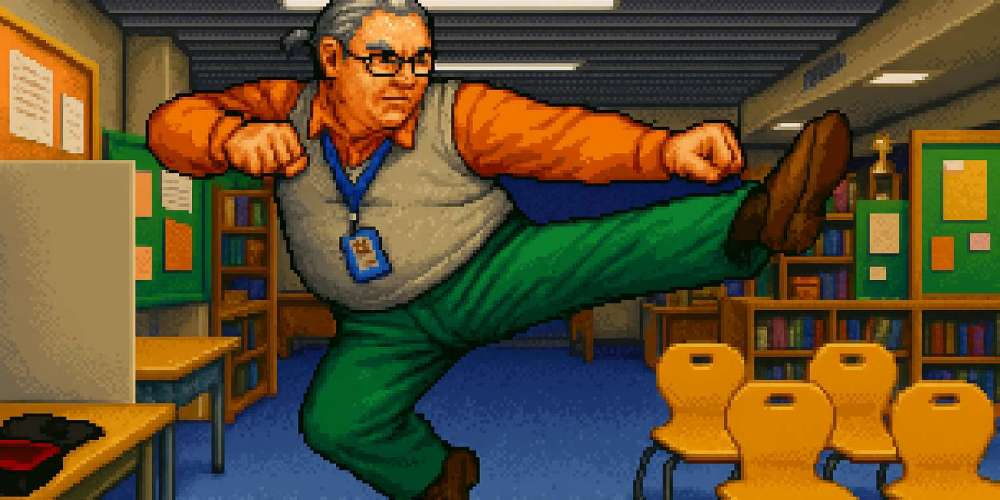
Button Mashing Through Life

Back when I was just a lad—you know the expression: knee-high to a grasshopper and all that—I used to play video games. (Not so much anymore.)

There was this one fighting game I played at home or at friends’ houses. It had almost no story. Just street brawls between characters from around the world. Nobody cared about the plot—except me. But that’s not really the point of today’s post.

You’d press buttons on the controller, and your character would attack, block, jump. If you pressed the buttons in just the right order, the character might throw a fireball or do a spin kick across the screen.

I could never pull that off.

More than once, I got accused of being a button masher—just frantically hitting buttons and hoping something cool would happen. I’d try to do a special move, and my guy would just… punch the air or crouch awkwardly.

So I fell back on the basics: jump, block, basic attack. Over and over. It was apparently the wrong way to play. “Cheap shots!” they’d say. “Come on, learn the moves!” But if I didn’t do it my way, I couldn’t play at all.

Then it got worse.

They released a Turbo Edition—it had more characters, sure, but the real feature? Speed. Everything moved faster. I barely kept up before, and now I was just mashing buttons in panic.

My friends got so good that they’d put the controller on the floor and play with their toes against me. One friend even disabled special moves entirely—and still had better reflexes.

It felt like the whole world had mastered this game. Meanwhile, I was barely hanging on, mashing buttons and hoping for a lucky win. It was frustrating. Honestly, I still can’t play real-time combat games. I just don’t think that fast.

But this isn’t just about video games.


Social Button Mashing

Growing up? Socializing? Going to school?

I was button mashing there, too.

Other kids seemed to know how to play the social game. They’d banter, joke, move from game to game, conversation to conversation, like they had the manual. I didn’t. I was just doing random things and hoping they were the right ones.

People made jokes, and I’d laugh—if others did. I usually didn’t get the punchline until an hour later. People told me things, and I believed them… until I found out later that I shouldn’t have.

My older brother used to ask me, “Do you want a USA?”

He never explained what that meant. The first few times, I said yes. I eventually learned that “USA” stood for Unexpected Sack Attack. A literal kick in the crotch.

It took me a few times to understand that it was always going to be a kick in the crotch.

So if I flinch when Americans say their country’s name, now you know why. And I apologize.

I spent years trying to play the game I thought everyone else was playing. I stuck to the same safe moves—repeat, duck, cover. But that’s exhausting. And lonely.


Turn-Based Thinking

That’s why I started playing role-playing games instead. In those games, nothing moved until I was ready. I could breathe. I could think. I could pause the world and plan my next step.

RPGs were like puzzle games where emotions and decisions mattered. I loved that.

And for a while, I believed that maybe I could learn how to be “normal” from these games—how people talked, how they handled problems, how they grew. They gave me space to try on different roles.

Looking back, I wasn’t just trying to win—I was trying to keep up. Trying not to fall behind in conversations, in friendships, in growing up. I wasn’t ‘playing wrong’—I just had a different controller, and that’s an important distinction.

Eventually, I realized something even better than games though.

Books were the real key.

Books didn’t judge how fast I turned the page. They didn’t expect instant reactions. They let me live someone else’s story for a while. And somewhere in all those pages, I started figuring out my own.

Autistic Teacher. Out or Not?

Today I had a nice short conversation with my Assistant Principal. Today was our Parent Teacher Conferences, and she was curious how they were going. At one point she asked me if I had told my parents about me being autistic.

At first I didn’t realize she meant my student’s parents. My response was a simple, yes, of course my parents know. They had me diagnosed when I was a child. It was just after I answered that I saw the look in her face. No, sorry. I have been open about it with the students, but not advertised to the parents.

I mean I wear a pin on my lanyard that says “I am Autistic.” They may have seen it, but I have not said anything to them. She asked me why. She has apparently been one of my supporters, without me knowing.

For context, I came out to the entire school staff about a week ago. I have had a group of people that knew for a while that could help support me. But I was asked to make a speech promoting Pink Shirt Day. During my speech I talked about how important the event was to me (even if it 2 months late). I talked about being bullied as a child for being autistic, and how that bullying still affects me today.

I think some of my coworkers clued in as to why I don’t join the many morale building activities at the local bars or the major school dress event for teachers each year. It’s too loud and too overwhelming.

My AP told me it is important to hear my story. It echoed a message I got on one of my posts a few months ago. But I have to be honest, it’s not the easiest thing to bring up.

At my old school I was open about being autistic. This is why some of my current coworkers know. They worked with me then. I had brought both Pink shirt day, and Blue shirt day to that school. I am certain neither has survived without me there.

Blue shirt day is April 2nd. It is now called World Autism Day. I set it up to help introduce neurodivergence to the children. The school was fine about it. But a co-worker there took offense. He was certain that the students would start to diagnose each other and that it would cause segregation and bullying.

I can understand his concerns. But if it is handled properly, with an external example, there should be no problem. I told him to use me as an example. He did not teach about autism, even if the school and I asked. I was the head of his department. The school was holding a charity event to raise money for an orphanage that cared for autistic children. He refused to acknowledge it.

After that he began to act aggressive to me. He knew about my autism, and it made him dislike me more. He used this knowledge to have me removed from my position as department head. And he used to spread rumors about me to the team I had. Some of them have joined me at my new school.

When I joined my current school, I opened up about my autism to my grade level lead. I was advised to not make it public. Parents might use it as a reason to request a different teacher for their child. So I didn’t. I was interviewed by the school magazine on my experience with neurodivergent students. However, I was still scared to talk about my own diagnosis.

After 3 years at this school, I began to open up about it again. But I still have doubts. Angry co-workers or parents may try to use the information about me. They could turn me into a scapegoat. It may already be happening with a parent. I don’t know.

I just want to be a positive role model for other autistic kids. Show them that we can overcome our sensitivities, and our hurdles. It is difficult, but not impossible. But some individuals will intentionally complicate things for us. They add to our regular struggles.

So the question opens up, for my next school I go to. Do I remain open about my Autism, or try to hide it again?