Childhood

Wrong

Buy it now on Amazon.

I have found myself talking a lot lately about what my childhood was like in some aspects. Parents of my students, My teaching team, students in my Newspaper club, all seem to want to know about my past. I have been upfront with my teaching team about my autism. To my students I just admit to being different. My own daughter told them about my balance issues, and me falling down the stairs often.

Coloring in Black

When I was a child, I would be given a coloring page by a teacher and given the instructions to “Color it.” While my classmates would share and trade the colored crayons with each other, all trying to make the most beautiful piece of art they could, I would take 1.

Usually Black.

Then I would get lost in the action of filling in all the spaces of the page. It did not occur to me that each of the spaces might require a different color. I would just zone out, forget about the world, and be focused, hyperfocused if you will, on the act of filling in these spaces.

My teachers used to report that there was something wrong with me. My picture that had started with a building, or a pretty pony, was now pitch black, with no traces of the original picture. It was all clearly colored, not scribbled on, but they didn’t seem to understand. There must be something wrong.

I was just happy I had colored it. I followed the instructions. I did not understand why this caused such commotion. The other children couldn’t even color in the lines, and were haphazardly colored with a lot of white space shown. But their pictures were considered beautiful. Mine was clearly colored in the lines, and no white spaces left. It just cost the whole black crayon, or most of it.

Nobody explained this to me. Not even as I grew up. I was an adult when I figured this out on my own.

Coloring still soothes me to this day.

Living with Dad

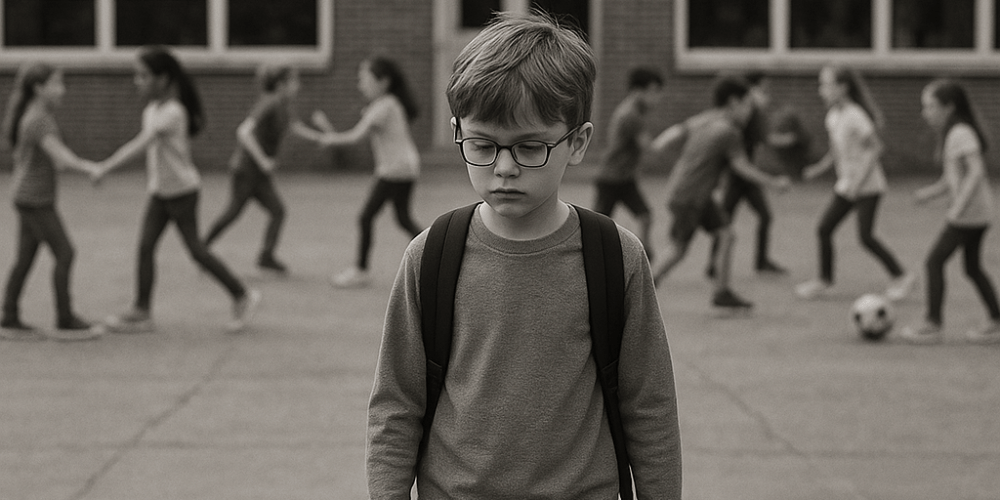
When I was quite young, I moved in with my father and stepmother. It was a new town and a new school. It was a small town, with a small town school. Differences are not understood, or appreciated in small towns. I used to get off the school bus so overwhelmed by the other kids, that I would have shut downs.

Once I apparently got off the bus and smacked another kid in the head with my metal lunch box. I don’t remember doing this, but I remember getting off the bus, and then I was suddenly in the principal’s office, not knowing what had happened. I was of course lectured about this. To this day, I don’t know who I hit, or if they were the cause of the shut down, or if they just happen to be too close, when I lashed out.

I had been told, of course that when I was really young I would lash out at my brothers, like an animal. I don’t have memories of this either. But I do remember promising to never let the monster out again. I hated myself for many years, and would come home from school and lock myself away just so that I could calm down and make sure nobody else got hurt.

My dad, and stepmom were unprepared for this, and they began looking for solutions. My condition was not well known back then. They believed something was wrong with me, and looked for ways to ‘cure’ me. I remember hearing something about electric shock therapy being considered. My mother took me back to her house before they decided.

Recess

Elementary was not an easy time. While other children would run and play with their friends, I would purposely walk laps around the school, or the school yard, depending on which school I was at. I would mostly look at the ground and focus on the walk. This was another method I had devised to keep the monster from escaping. But even when I was not overwhelmed, I kept it up. Routine is very important, and it would seem strange not to walk around in loops.

I made friends with the parent volunteers that would walk around the school for student safety. Teachers in those days did not monitor the playground. Parents did. Teachers stayed indoors, and I believe, enjoyed the little time they had without the children.

The Skateboard Incident

I had a skateboard. I liked it, and would ride on it around my house. One time I had to go to the corner store to get something for my stepdad. I rode my skateboard. I ran into some of my classmates, who had never seen me on my board. They asked me, in a very rude way, if I was a skater.

I have a skateboard, I ride my skateboard, thus by my logic, I am a skater. I was completely oblivious to the fact that there was, and still is, a whole subculture of people called “skaters.” So I said yes. They then began demanding that I do some tricks for them to prove it. I had never heard of these terms. One was called an “Ollie.” When I didn’t know what they were talking about they called me a “poser.” I did not know this term either, but the way they said it hurt. That was the last time I rode my skateboard. It sat in the corner of my room for years.

I didn’t know what I had done to make them angry or upset with me. All I knew was something about that board made people dislike me. So I stopped.

There were other things I stopped for the same reason. I stopped admitting I liked wrestling, but didn’t want to wrestle, that made people angry. I stopped bringing toys to school for show and tell, because I had the wrong toys. I stopped talking about books because I took twice as long as everyone else to read, and apparently that is bad. I even tried my hand at poetry once, but that almost got me beat up.

I was told by my mother that I would be a smart child, but that also seemed to make people upset with me, so I settled for the average grades. Not too high, people didn’t like that. Not too low, Mom wouldn’t like that. So I would just do enough, then doodle in my book. Which I could then fill in the doodles to calm myself.led an “Ollie.” When I didn’t know what they were talking about they called me a “poser.” I did not know this term either, but the way they said it hurt. That was the last time I rode my skateboard. It sat in the corner of my room for years.

I didn’t know what I had done to make them angry or upset with me. All I knew was something about that board made people dislike me. So I stopped.

There were other things I stopped for the same reason. I stopped admitting I liked wrestling, but didn’t want to wrestle, that made people angry. I stopped bringing toys to school for show and tell, because I had the wrong toys. I stopped talking about books because I took twice as long as everyone else to read, and apparently that is bad. I even tried my hand at poetry once, but that almost got me beat up.

I was told by my mother that I would be a smart child, but that also seemed to make people upset with me, so I settled for the average grades. Not too high, people didn’t like that. Not too low, Mom wouldn’t like that. So I would just do enough, then doodle in my book. Which I could then fill in the doodles to calm myself.

Now

If someone had told me back then that filling a page in black crayon wasn’t wrong, just different, I think I would have believed in myself a little more. That’s what I hope to give my students. I have been at schools that ignore the odd kids. I have been at schools that outright ostracize them. I have been at school where they want to help the “spectrum kids,” but the leadership doesn’t understand them, and doesn’t accept advice from teachers that do.

When parents or colleagues ask me what my childhood was like, I often hesitate. Do I tell them the truth; that difference was treated as wrong? Or do I tell them what I wish had been true?

It’s even more heartbreaking when the parents, also ignore, refuse to acknowledge, or help their kids. I have met parents who want others to “fix their kid” and won’t hear that they, as adults, need to learn how to work with their child. How dare someone tell them that their kid needs them to step up and learn something new. Shame on us for wanting to help the child survive their family.

I still try to have difficult conversations with families and school leadership about these things. And I know we all can make a difference. I know we can make the world a place where a little boy or girl is not afraid to be themselves, and enjoy the things they do. Where they will never feel like what they are is wrong.

Playgrounds: Fun & Games or Danger?

As a parent, living abroad, I have had a very hard time finding free places for my children to play. This has been an ongoing difficulty for the last 18 years. Parks and recreation areas exist, but are not geared for children.

In Beijing, there are a lot of green space parks. I see them all around the city. We walk through them and can relax easily. The one thing I have noticed about these parks, is that they are often equipped with outdoor exercise equipment. Equipment that is suited for the aging senior citizen population. There are no swings, or see saws, or climbing rigs. Instead there are walkers, and stair climbers, and rigs for rotating arms and wrists.

I asked someone about this once. I was told that children needed to use their energy to study and prepare for adulthood. After retirement, they could play.

Apartment compounds are similarly equipped for seniors. The one compound we lived in did have an aging wooden climbing rig with some metal rocking horses on springs. but they were falling apart and not cared for at all. It had no children playing at it.

The school I worked for years at fluctuated on this. When I joined 18 years ago, they had a jungle gym with a slide, climbing bars and stepping stones. Less than a year after I joined a little boy got hurt on the rig. The school removed it to avoid a lawsuit. For the next 2 years there was no playground, just a running track, and soccer field.

Three years later, they installed some new climbing bars. That same year, a girl fell off them and banged her head on the bars on the way down. They were dug up and removed.

5 years later they installed a swing set near the front gate. The security guards would keep an eye on it. I am not clear on the cause, but within a month, they removed the swing and left the frame.

Every few years the school would put something in, and within 2 or 3 months it would be gone.

For the entire primary school years of my two older children, we had to pay for them to enter private playgrounds. They would appear at supermarkets, or malls. However, as soon as there was enough Yearly passes sold, they would disappear. Few of them stayed open. and they were always packed.

I asked one of my son’s classmate’s parents once about how they arranged social time. I was told, that they arranged for their child to attend the same math classes and English classes after school as their friends. Then they could play in class. This seemed to be the general consensus. We did eventually get my son to be able to visit his friend’s house to play a few times. My daughter was not so lucky.

When we moved to my new school I thought things might be different. The school has a lovely playground, and it takes care of it. During the pandemic, my children had free reign over the playground with the other kids that lived on campus. It was great.

Kids at this school had to have insurance. It was a requirement to even register with the school. So if a child gets hurt, the parents wouldn’t sue the school. Theoretically.

Last summer they replaced the playground with a great big new playground. It has climbing poles, and nets, and slides, and in one area 3 roundabouts. 2 that you can sit on and 1 that you hang from.

Well a little girl was on the roundabout and flew off while it was spinning. So the school welded them all still. The kids, being kids, broke the weld by forcing the roundabouts around. and the school bolted them.

So now we have 3 brand new roundabouts that are useless, and are just seats, or hanging bars.

My point with all this is this. When did society decide that children cannot play? Or that they can only play where there is a profit to be made from them?

I remember being thrown off of a seesaw when I was a child. I lost a tooth, and bloodied my nose. It was terrifying, and I don’t recommend it. But from my experience, everyone nearby learned. The compound kept the seesaw. When the other kids played on it, they made sure that the weight was close to even.

I cannot imagine what would happen here and now if that happened.

Look I don’t want my children being mauled or disabled by playground equipment. but I do want them to be able to learn from making mistakes. They need to learn to identify problems or dangers. If we take all dangers away from them, they cannot learn this fundamental skill.

My children used to see more playgrounds in Peppa Pig and Mickey Mouse Clubhouse than they did in real life. So with the youngest I want to keep her out playing as long as the air is clean enough. If she gets hurt, we’ll hug her and she will learn from it. Worse case scenario, she needs a doctor for an injury. but still, she will get support from us, and will learn. She will also get time to play with other kids, and learn social skills that we had to fight hard to expose her older siblings to.

Does this make me a bad parent in the world’s eyes?

Dungeons & Dragons & Me.

It feels strange to talk about this, so please be kind as you read.

When I was young, I had a very hard time making and keeping friends. In elementary school I was accepted by my younger brother’s friends, but did not completely fit in there. I was the big kid that asked the younger kids a lot of questions.

When I was in Junior High (What we called Middle School), I had a friend. We will call him Rick. I discovered much later that Rick was pretending. He was always doing and saying things to make me look bad so people would laugh at me. I didn’t notice, because Rick smiled when near me and asked me questions, and ate lunch with me. He laughed near me. I thought he was laughing with me, but discovered later that it was at me.

Around this time, my oldest brother was part of a group of High Schoolers who played Dungeons and Dragons. They often played at our house in the basement. I would sit and watch them, and they eventually invited me to play, much to my brother’s dismay.

These older guys made me feel welcome. At that time, D&D was not a popular game. It was the kind of thing people got bullied for playing. But these guys accepted me, truly.

After a few months, I went and bought the basic boxed set with my allowance. (The Red Box Set). The game was amazing because it opened up opportunities to try things without being ridiculed. As an autistic person, the fear of making a mistake, or saying the wrong thing can be paralyzing. We are always afraid that we will do the wrong thing. We fear being assaulted verbally or emotionally by others for mistakes.

No it is not an irrational fear. We get this fear because of experience. We have received criticism for everything, and nothing. Growing up, it felt that I could do no right. My family were always cautious abotu saying things near me, my school mates chastised me for playing wrong. My teachers, were nice, but were always correcting me for things I didn’t understand.

Anyways, Dungeons and Dragons allowed me to try things out in a game of imagination. If it was a mistake, the other players wouldn’t pick on me or tease me. I would find out the logical conclusion to my actions, and then we would move on. No problems.

I tried running games for Rick. He hated the game, and wanted nothing but to hurt people in the game. For those in the know, he would be called a MurderHobo. For those not, in the games of imagination, he would describe burning down orphanages, and stabbing people in the street. As an empathic person, this would horrify me. I would have actual nightmares after playing with him. So I stopped.

My younger brother and his friends were interested in playing, and that was great. I ran the games more than I played them. These guys wanted to help people in the game. They were people with a good moral compass. And so I played with them. Rick still hung out with me at school. He even convinced me to run a game for a few other people and him.

That was a mistake. We were making characters one time for the new game, and the three of them began discussing something. I did not understand what they were talking about, even though they did not hide it. Eventually, 10 minutes in, I realized they are talking about how to physically torture me. When I protested, they said it was a joke. I left. I never talked to them again.

So now I was just entering High School, and I had no friends of my own at school. My younger brother was in Junior High with his friends. I never felt so alone. I recognized a couple of people from my grade 1 year. I moved a lot when I was a kid, so was relieved to see them again. But when I tried to become friends with them, I was told by a teacher that I had scared them. I was to leave them alone.

So I had this game I could play after school, and that got me through Grade 10. No friends.

Grade 11 is when I met my first friends that I had not borrowed from my brothers. They invited me to watch Japanese cartoons at lunch, and I invited them to play Dungeons and Dragons. (Actually a version of the game I had made myself.) And most of these people I still consider friends, even though I don’t talk to them often. Some I only talk to every couple of years.

When I came across a Kickstarter 6 or 7 years ago called Critical Core, I had to invest. This was D&D written in a way to help Autistic kids learn to interact with others. I bought my set. Covid hit, and I honestly didn’t think I would every get it because of the issues caused by the pandemic. But they sent me a Digital copy, and then a physical copy.

Critical Core is what I needed when I was young. I urge you all to look it over. The people who designed this care. They get it. They understand how hard life can be for kids like me. And they want to make it better. No they did not sponsor this. I doubt they will ever find out I wrote this.

Now I am back, and as an adult at the job I have, D&D was my go to stress relief. Except this year, I have nobody to play with again. And so I write here. Schedules and life have fallen apart. Work feels more like work, and is a lot heavier. But no time to play.

It sucks.