
Games

Button Mashing Through Life

Back when I was just a lad—you know the expression: knee-high to a grasshopper and all that—I used to play video games. (Not so much anymore.)

There was this one fighting game I played at home or at friends’ houses. It had almost no story. Just street brawls between characters from around the world. Nobody cared about the plot—except me. But that’s not really the point of today’s post.

You’d press buttons on the controller, and your character would attack, block, jump. If you pressed the buttons in just the right order, the character might throw a fireball or do a spin kick across the screen.

I could never pull that off.

More than once, I got accused of being a button masher—just frantically hitting buttons and hoping something cool would happen. I’d try to do a special move, and my guy would just… punch the air or crouch awkwardly.

So I fell back on the basics: jump, block, basic attack. Over and over. It was apparently the wrong way to play. “Cheap shots!” they’d say. “Come on, learn the moves!” But if I didn’t do it my way, I couldn’t play at all.

Then it got worse.

They released a Turbo Edition—it had more characters, sure, but the real feature? Speed. Everything moved faster. I barely kept up before, and now I was just mashing buttons in panic.

My friends got so good that they’d put the controller on the floor and play with their toes against me. One friend even disabled special moves entirely—and still had better reflexes.

It felt like the whole world had mastered this game. Meanwhile, I was barely hanging on, mashing buttons and hoping for a lucky win. It was frustrating. Honestly, I still can’t play real-time combat games. I just don’t think that fast.

But this isn’t just about video games.


Social Button Mashing

Growing up? Socializing? Going to school?

I was button mashing there, too.

Other kids seemed to know how to play the social game. They’d banter, joke, move from game to game, conversation to conversation, like they had the manual. I didn’t. I was just doing random things and hoping they were the right ones.

People made jokes, and I’d laugh—if others did. I usually didn’t get the punchline until an hour later. People told me things, and I believed them… until I found out later that I shouldn’t have.

My older brother used to ask me, “Do you want a USA?”

He never explained what that meant. The first few times, I said yes. I eventually learned that “USA” stood for Unexpected Sack Attack. A literal kick in the crotch.

It took me a few times to understand that it was always going to be a kick in the crotch.

So if I flinch when Americans say their country’s name, now you know why. And I apologize.

I spent years trying to play the game I thought everyone else was playing. I stuck to the same safe moves—repeat, duck, cover. But that’s exhausting. And lonely.


Turn-Based Thinking

That’s why I started playing role-playing games instead. In those games, nothing moved until I was ready. I could breathe. I could think. I could pause the world and plan my next step.

RPGs were like puzzle games where emotions and decisions mattered. I loved that.

And for a while, I believed that maybe I could learn how to be “normal” from these games—how people talked, how they handled problems, how they grew. They gave me space to try on different roles.

Looking back, I wasn’t just trying to win—I was trying to keep up. Trying not to fall behind in conversations, in friendships, in growing up. I wasn’t ‘playing wrong’—I just had a different controller, and that’s an important distinction.

Eventually, I realized something even better than games though.

Books were the real key.

Books didn’t judge how fast I turned the page. They didn’t expect instant reactions. They let me live someone else’s story for a while. And somewhere in all those pages, I started figuring out my own.
Hobbies & Transitions

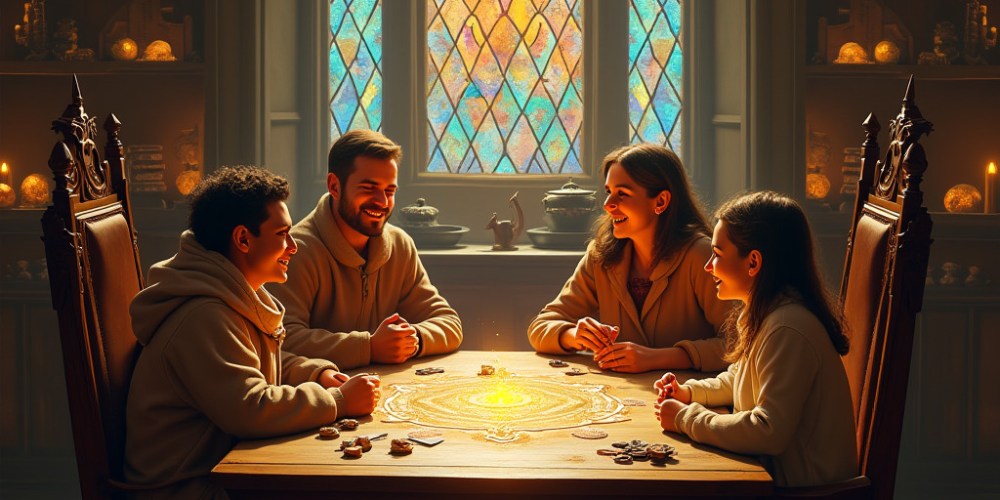
One of my Special Interests is Tabletop games. Whether they are Role Playing, or games of Chance, or Games of Skill, I enjoy many of them. I was going to write all of them, but I realized as I types, that I really don’t.

I love games of Chance, and Card Games, specifically. I am less enthused about games that deal with strategy and tactics. However, I enjoy them if they have a rich history, like the Chess family of Games. (No, Chess is not 1 game, look it up.)

Where this stems from is my Great Uncle Ross. Uncle Ross would let us play in his basement whenever we visited. I remember shelves and shelves of board games. To my childhood mind, there seemed like hundreds. I have no idea how many he really had.

I do remember loving games like Kerplunk, Clue, Sorry, and Mikado. Kerplunk and Mikado were fascinating because you had to remove sticks, without causing anything else to move or fall. This was particularly hard for me. But the part I loved was the analyzing the options, and trying to understand the physics of the situation.

Clue, Sorry, Snakes and Ladders and other games where a game of chance. If someone won or lost, it was not a matter of me miscalculating, or not reading other people. It was dice rolls, and a chance to talk and laugh.

Games like Monopoly, or Uno did not appeal to me until I was much older. These games seemed to be created for the sole purpose of being vindictive, or mean to each other. I never understood people who enjoyed games by crushing their opponents.

I have grown into Uno. The matching and chaos that can be created by multiple players appeals to me. But I still don’t enjoy vindictive players.

Anyways. As part of my Special interests, I have set up a second Blog. Baldwin Games.
I have been moving my older posts about games from this blog to that one.
I am not complete, but I feel Like I will post there once a week. (1 New, 1 old until it is all moved).
Enjoy!

Routines: falling into or making them?

Routines are a very important part of life for me, and for all autistics. Th difference between routines and schedules is blurred for many people. For us, however, there is an obvious difference, and when routines and schedules clash, headaches occur.

So first let’s explain what I mean by both Routines and Schedules before we continue. A routine is an action repeated in a certain order on a regular basis. the actions do not have a set time to begin or end.

My daily drinks are a routine; Every morning, I have a coffee with or just after breakfast. I then bring a mug of hot chocolate with me to work. Hot drinks calm me down, and help me relax and think. On a tough day, my hot chocolate doesn’t last. I must then get a mocha from the cafe on campus. Then in the evening after dinner, when the children have gone to bed, I have a lemon tea.

A schedule dictates the times things begin and end. Period one begins at 8:20, and ends at 9:05. No exception.

I have a love-hate relationship with schedules. First: I have a hard time keeping track of time, and I know several autistics that do as well. To combat this, I have alarms on my phone and smart watch. They warn me when there is only 5 minutes left to a class period or a recess. I don’t like surprise schedule changes, or endings. My other problem is my brain is fixed that a schedule must be followed. I get anxious if it is not. Family running a little late for church? anxiety. Another teacher running into recess or break time with my students? anxiety. I finish my lesson early, and have empty space to fill? anxiety.

Many Autistics are able to easily merge their work schedule with their routines. I envy this. However, the school I work at does something that makes it really hard to keep track of for me. Our schedules do not follow the calendar week. The schedules follow “Letter Days”. Each week is different than the previous week. but there is still a repetition there. So now I have to keep track of 2 separate calendars in my head. Children have special events on Week Days (Little Johnny takes the bus home on Mondays), but classes follow “Letter days” (Grammar class happens on Days A & C)

Many days my head hurts from planning the week.

But this comes to the point of all this. You do these things, you eventually fall into routine with them. after 3 years, I am better at planning my week around the letter days. I also have a better control of my daily routine. You just fall into them whether you like it or not.

Arguably, falling into a routine because it is forced on you, is easier than creating your own routine.

Often we are told about how managing our routines can benefit us. As an Autistic, I have a limited amount of social energy. So I try to use it sparingly. the problem is, if I drain myself, it stops me from thinking. My brain shuts down.

I know I need to change my routine, and go to bed earlier, or to blog regularly. But the change of routine takes energy, and it feels unnatural for the first month or so. So if I am drained, like I often am lately. I don’t have the energy to fight the routine, or to change it. I just fall into it to save energy.

One example of this. Back in September my wife and I promised to walk with each other Monday, Wednesday, Friday. The plan was after dark, just around the block. But every day I have come home completely exhausted. I have just enough energy to (most days) help my daughter with her homework. And then I shut down. I stare at a screen or a wall, and cannot function for hours.

Another example is My weekly teacher D&D Game. Many people would think that this would cause me to get drained. But it was my routine. I would talk with friends, problem solve logically, or laugh. I would come home feeling a bit refreshed. When we had a month of cancellations, I was more exhausted just coming home. and I had to accept a change of routine, that I really did not want.

Of course some routine changes are easier than others. If I have someone there to help me with the routine, it becomes easier. My wife helping me get used to the weekly church is an example. Or the messages I get from members of my Men’s group reminding me of the Monday meeting. these were easy to get into. Other people are sharing the energy loss.

Alone, it is hard, exhausting, and sometimes terrifying. Not logically terrifying, but emotionally so. Knowing how hard it can be, I just don’t want to do it many times.

Who helps you with your routine changes? can you make these changes on your own? please let me know.