September’s done, and it has been a pretty busy month. The children were introduced to a lot of new things, some new culture, some new skills. We got them out of the standard box-like classroom. This month we introduced the children to each other, they have forged friendships. The students have begun to understand the classroom rules. The students have gotten used to their desks, and classroom facilities. The kids have learned phonics, sight-reading, vocabulary, culture, and diversity. They have learned about change. They learned swimming, baseball, football, roller-skating and basketball skills. We have learned about Chinese culture and historical locations. We learned about organic farming. We learned about How to use a tablet computer. We learned how to make mooncakes. There has been a lot of learning. October has arrived and this month we have Parent Teacher Meetings, Play practice, Halloween, and more experiments.
Rules & Culture
Parent Teacher Meetings
October Holiday Homework
Programs used in Class.
New Culture:
Anyone who has seen the classroom has noticed that it is different than other classes. Not just physically different, but culturally different. We are a mixed culture classroom, there are still aspects of Chinese culture in the class that are needed for when our students interact with other classes, but for the most part it is an American class culture. Interactive is the term used by most North American classroom teachers nowadays. Get the children involved. .In science class, we have discussions (Children can use their Chinese and have it translated at this point). They had one hands on experiment so far, in which they tried to block light from a torch. In writing class, they wrote their phonics and sentences, then they got to draw the meaning of one of their sentences to show understanding. In social studies they do a daily show & tell, where they learn both speaking skills, and audience skills.
The classroom we are building together is a more open class, but it is a class built upon respect. Below are our classroom rules we have discussed. And the reason why for each.
 Do Not Hit: This is rule number 1. It is for safety reasons mainly. This involves punching and kicking. I feel every class in the world should follow this rule, but sadly I am not the majority. Hitting, or pretending to hit others is a violent behaviour and I want the children to grow up finding other means to solve their problems. In the case of play fighting, I have seen many times where kids are pretending to punch and kick at each other, and 1 child underestimates the distance between them and actually hurts the other child. By kicking them in the eye, or face. I know the heroes of stories and (my favourite), Superheroes do a lot of exciting fighting, but I want the children to understand that this is done when all other options are exhausted.
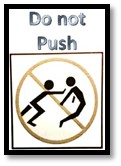 Do Not Push: This is a rule I strongly urge kids to follow. Pushing, can cause children to fall, and hurt themselves, inside the classroom and outside the classroom. It tells the person that is being pushed that you feel that you are more important than them, and this is not the type of citizens we want inheriting the world. There have been cases world wide, (Even in our own school in the past) where a child has pushed another kid, and they fell off the play ground equipment, or fell into a sign or other obsticle and got hurt badly. Where this is not as bad as hitting, it is still important. Both I and the children realize that this can happen by accident, and when that happens we have practiced apologizing to each other.
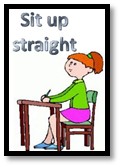 Sit Up Straight: This rule has 2 reasons behind it. On the one hand, it is bad for anyone to be slouching. It hurts their back, and makes it harder for them to pay attention, or be active later. Slouching (or laying on your desk) also show the person who is talking to you that you are not interested in them and that they are not important. Sitting up straight shows people that you are interested in what they are saying, and that you feel that they are worth listening to. This is a harder one for children to follow at the younger ages, because their attention span is much smaller than adults, but it is an important habit to get into as the older you get the harder it is to get used to doing.
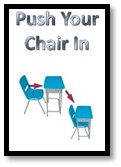
- Push Your Chair In: This is simple respect for the class. It can be hard to move around the room with too many chairs in the aisles.
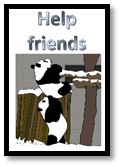 Help friends: I noticed in my years in China, and Korea that when a child has a difficulty, their first response (And many time their only willing response) is to run to a parent or a teacher for help. While this is great it can sometimes be a bit overwhelming for the adult. In Canada & North America, children ask each other for help first, then if they still cannot find an answer, they ask the adults. This is more of a guideline than a rule in class, but I am trying to nourish this attitude of helping each other first.
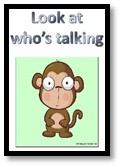 Look at who is talking: this is a courtesy more than a rule. It is considered rude to turn your back to someone who is talking to you. I again am trying to foster polite habits in the children
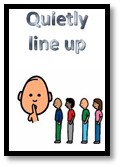 Quietly line up: While our class is off on adventures, and amazing outside lessons, there are other classes in the school who are stuck indoors. We have baseball, football, swimming, Wester P.E., and roller skating. We have lunches in the cafeteria, while the other grade 1 classes are eating in their classrooms. We are out of our classroom a lot. And while this is good for us, if we are disrupting other classes in the school by being too noisy it reflects badly on us as a class. So, as a courtesy to the rest of the school: we are quiet in the hallways, and line up quietly. (Outside is free to talk.)
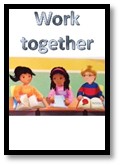 Work together: This is similar to Rule #5, but when we work together, it means we share our equipment, we help each other. We do not go anywhere unless everyone is together.
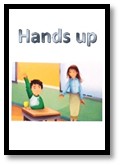 Hands Up: this is again, a courtesy more than a rule that I want the children to learn. Sometimes the children get excited over lessons, and they all want to talk and add more to the discussion, but of course we can’t hear 25 voices at once. So I ask that they put their hands up in these situations. Calling out can be quite noisy, and it interrupts the current speaker.
 Everyone from everywhere is equal: This is a North American Rule. We all have different skin colors, and features. Making jokes about these will not be tolerated. It is rude, and it make some people feel upset that their “different” from the others. We talked about how different is good in class, but I would like to expand upon this more as we go.
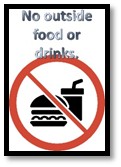 No outside food or drink: This is both a school rule at Zhong De and a North American Rule. This is a safety rule and a hygiene rule. When a child brings snacks to class first thing they want to do is share with their friends. This seems nice, but usually they have enough for a few friends but not everyone. Also, most children do not know if the food they are sharing will cause an allergic reaction in another student. In North America it is so serious, that some students can’t be near certain foods because of their allergy. Even if children do not share their food but eat their snacks alone, they tend to hide the wrappers or left overs (To not get caught eating in class….) but these wrappers and left overs can attract flies and ants into the room. We are trying to avoid this.
 Parent Teacher Meetings:
Parent teacher meetings are not the same s the Parent teacher Association. The Parent Teacher Association (PTA) is used to discuss events and classroom activities as a group. The Parent Teacher Meeting (PTM) is an opportunity for a child’s family to come in and discuss their child’s education directly with the teacher. In America this is a one on one meeting (1 parent & 1 teacher). However we are going to be doing things a little differently. One or two parents can come to the meeting, and they will get the chance to discuss with all of the teachers. PTM’s are usually between 15 and 25 minutes. There is a format we follow to make sure that everything is covered.
When a parent arrives, they will great each other, then the teachers will spend a moment showing the parents what the child is doing well at. After this Parents can discuss activities they would like their child involved in related. (If Little Suzie is doing well in “Show and Tell” the parents might tell us that she has always been this way, and suggest she do a speaking part during the play festivals.) After this we will look at what the child is struggling with. We will discuss possible reasons the child is struggling with the subject and possible ways to help (If Little Suzie is having trouble writing, we might suggest some handwriting practice at home, and the parents might ask that we give her time at break time to do some practice.) After this the parents will get the chance to look at the student’s workbooks and notebooks and ask a few questions before we finish. Then the next parents will come in.
You will be able to schedule a meeting during regular school days in October. Meeting times will be between 5:00~6:00
October Holiday Homework:
 In English Class on September 29th ~30th we read “I Met Ted” in Class. I sent a video of myself reading it in the WeChat group. I asked that each child read me the Story by WeChat. It has to be finished before the 7th of October.
 In addition to “I Met Ted” I asked that each child read at least 1 story from the RAZ-Kids Stories every day. I am able to log in to the app and see who was unable to log in, and what books you have read. The reason I chose RAZ Kids is it allows teachers to manage what the kids are reading, and it lets us hear you read when you do the Practice reading or reading assessments.
 Since October 10th is Columbus day, we will be learning about exploring, and I’d like to see that the children did a bit of that during their time off. Explorers find new things, so I’d like to see what types of things the children can find during their exploring.
 We are learning about energy in science class, we talked about how light and sound are bot energies. A fun way to show sound is to make a paper cup telephone. To make this you need 2 paper cups, 2 paperclips and at least 3 meters of string. (The thicker the better.)
- Poke a small hole in the bottom of each cup
- Put the string into the hole of one cup, so that the end is inside the cup.
- Tie the end of the string to a paperclip.
- Put the string through the hole in the bottom of the other cup, so that the end is inside the cup.
- Ties this end to a paperclip.
- Pull the string so that the paperclip is on the bottom of the cup.
- Hold the cups so that the string is tight, and talk through the cup to the person on the other cup.
 In Social Studies we will also be learning about community, and how to help the community, the focus is on “helping” and that a community can be as small as a family or as big as a country. We will be making a bulletin board display based upon helping around the middle of October. So please take pictures of when the children are helping around the house, or in the community.
Programs
All of the programs are available on the APK-Pure Market for Android.
 Other markets have varying results. The iTunes market seems pretty stable for iPads & iPhones.
 We use the “Kids A-Z” App (Also called “Raz-Kids”) for reading.
School name: beijingzhongdeschool
 We will be using “Skoolbo Common Core” near the end of October, and early November. It focuses on vocabulary, language skills, and maths mostly.
School Code: BD938FM
The other Apps that we use, while fun and educational do not allow the teacher to check up on a student’s progress, so I will not post them here for now.
 Baldwins Abroad